Online analysis for prompt process control
Online analysis for prompt process control
Raw materials in the mining and mineral processing industry often have a significant variation in chemical and mineralogical composition. Variations in mineralogy and the presence of impurities decrease the stability and efficiency of any subsequent beneficiation or processing stages. This not only affects processing efficiency but can also increase production costs and reduce final product quality. It is therefore highly sensible and financially beneficial to understand any real-time variation in the material flow.
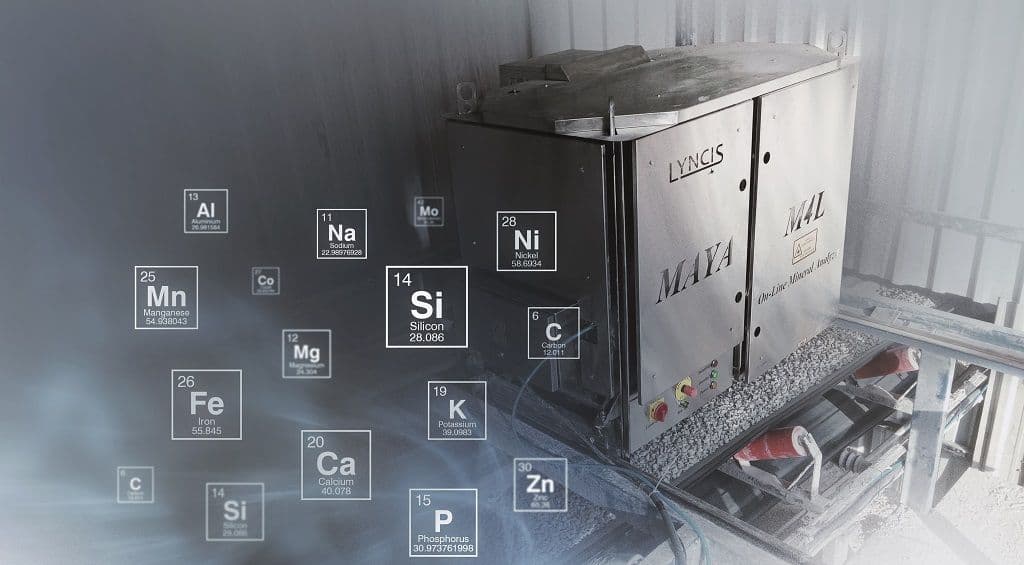
With real-time data, it is possible to manage variations in ore grade, reject impurities, blend different grades of materials and make real-time adjustments in the dosage of fluxes and reagents. All elements of interest on conveyor belts or in slurry pipe can be detected in real-time, without sampling and sample preparation.
Chemical analyzer measurements can provide required data for prompt corrections to process parameters without the potential delays of up to several hours for sampling and laboratory-based results. Adjustments can be applied to all production stages including mining, beneficiation, raw material preparation and blending, dosage and quality control.
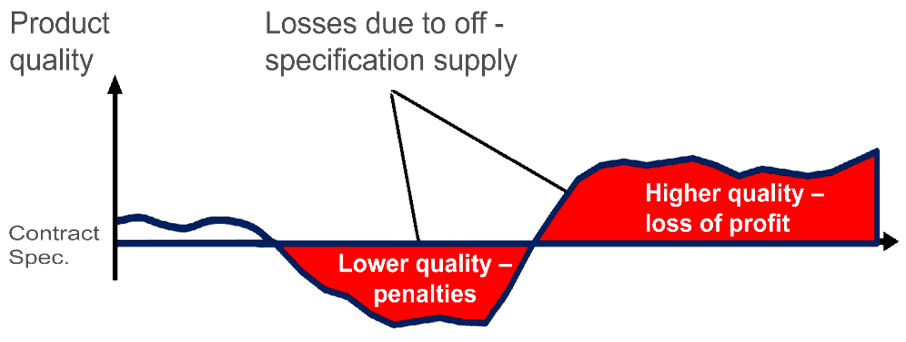
Losses without real-time information about product chemistry
Poor Product Quality
- Penalty for off-grade product
- Positive tolerance during shipment
- Lost profit for selling high grade product at standard price
Costly and Inefficient Production
- Raw mix chemistry variation
- Unstable burning/smelting/flotation
- High fuel/energy/reagent consumption
- Unstable final product quality
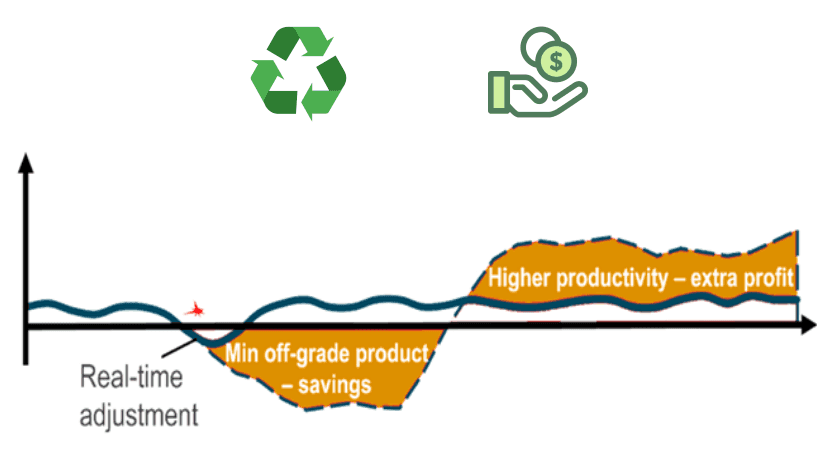
Benefits from real-time information about product chemistry
Optimal raw mix preparation
• Raw material supply without impurities and low grades
• Optimal blending and fluxes dosage
• Stable raw mix chemistry
Stable final product quality
• Increased production volume due to reduced positive tolerance
• Higher profits for higher grade products
• Reduced processing cost for off-grade ores
• Eliminated off-grade product penalties
Optimal technological process
• Stable burning / smelting / flotation
• Stable product/ contamination ratio
• Savings in fuel, energy and reagent consumption
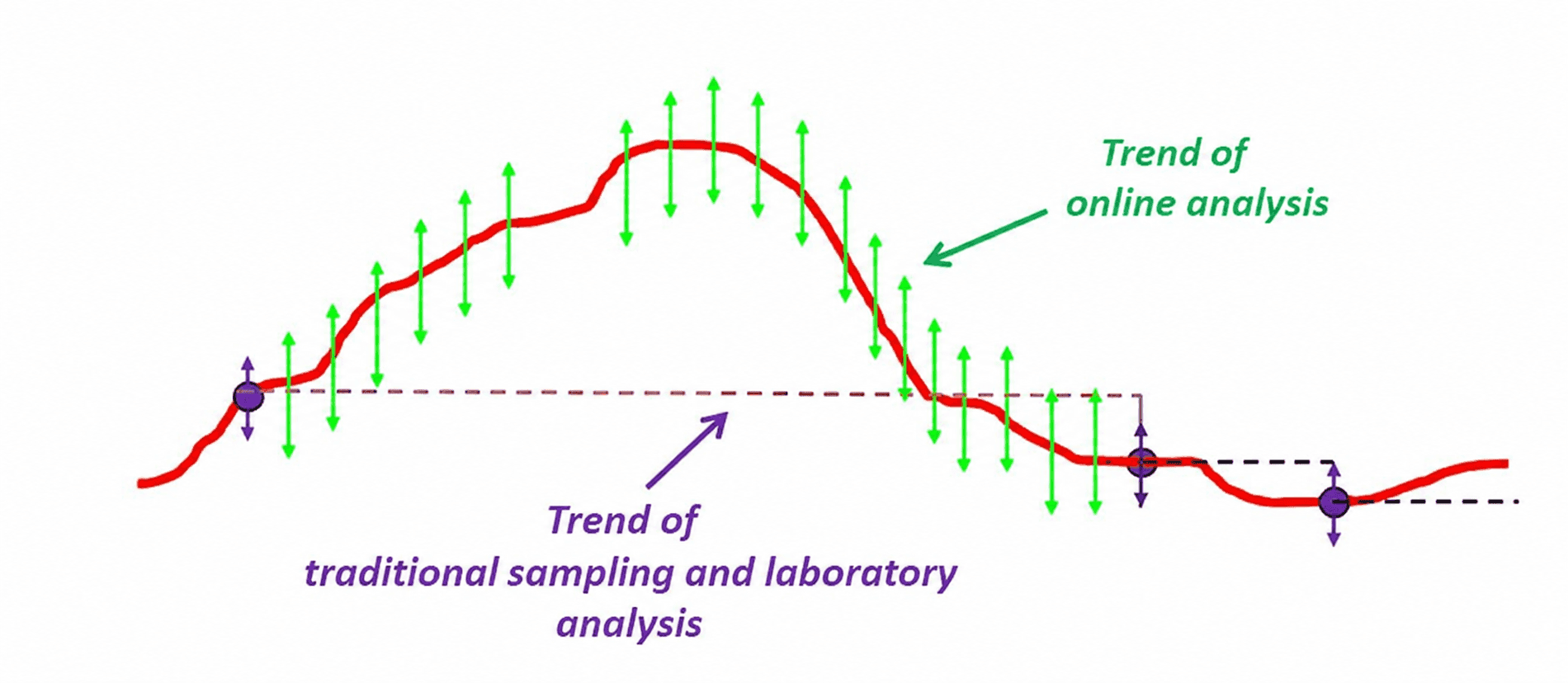
Real-time analysis vs analysis of periodic collected samles
- When a process has significant variations, real-time data are more important than very high accuracy at individual points for continioud process control
- Laboratory analysis of periodically collected average samples misses the significant chemistry variation, and provides a time delay