Online Analyzer in Production of Cement
Online Analyzer in Production of Cement
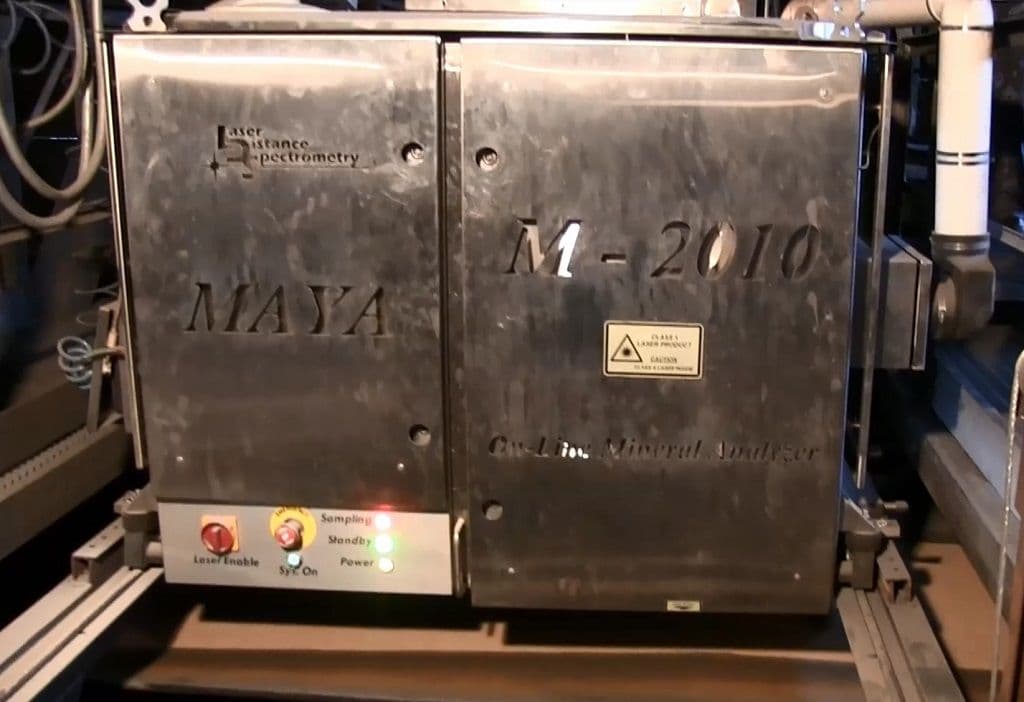
Lyncis Laser (LIBS) Cement Online Analyzer provides accurate and reliable chemical composition data of crushed limestone (source of calcite), clay, mudstone or shale (main source of silica and alumina), iron ore or metallurgical slag (source of iron) on the belt. It lets the operators manage their quarries more efficient and form consistent quality stockpiles. Low-grade materials can be incorporated in the stock formation extending life type of the quarry.
Quick real-time analysis of raw mix, meal, clinker or cement let cement manufacturers automatically adjust the dosage and mixing of raw materials. The stable targeted material chemistry can be maintained with a low standard deviation of Lime Saturation Factor (LSF), Silica (SR), Alumina (AR) Ratios ensuring good quality cement is made. The cement cross belt analyzer can be installed at various points of the production process depending on the application.
Typycal applications
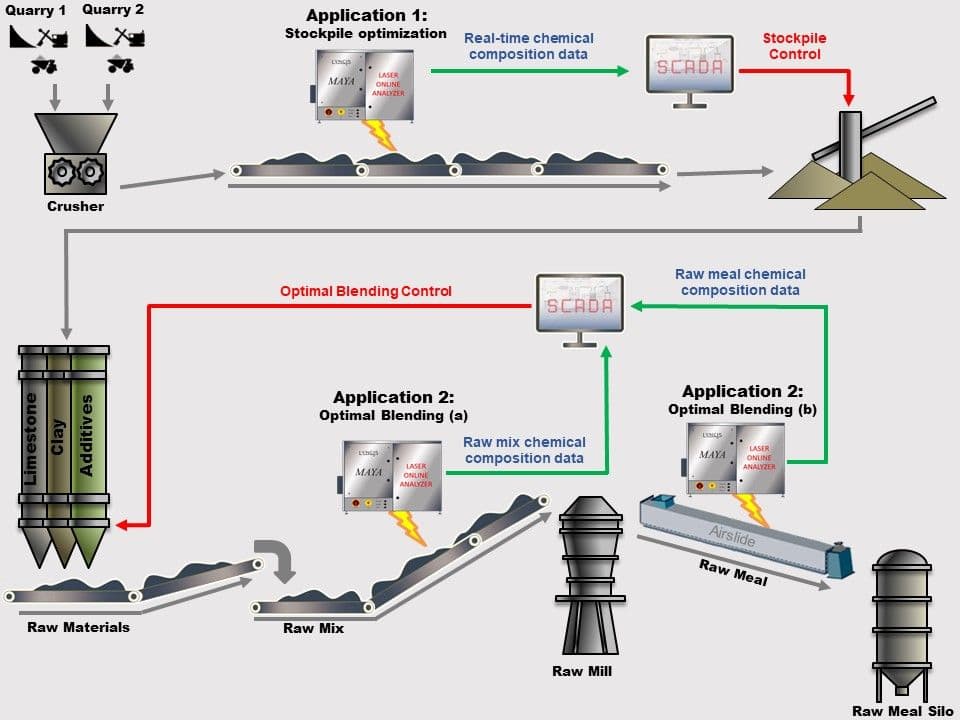
Limestone stockpiling
Quality control of clinker or cement
Optimal blending for stable raw meal
Before or after Raw Mill - Pros and Cons
At first glance it looks like installing the analyzer on the conveyor is preferable as you could get the chemical composition of the raw mix before you load it to the raw mill. In such case, you could correct all deviations from the recipe by adjusting the dosage of raw components – limestone, clay, sand, iron ore, bauxite ore and other materials specific to your technology before you load the raw mill.
However, the accuracy of analysis of the material on the conveyor may be lower than on an airslide. Different materials are stored in different bins and deposited sequentially on a conveyor belt resulting in layering which may introduce inaccuracies. Layering may affect the analytical performance of all types of analyzers despite analyzer technology. Fortunately layering is eliminated after several transfers of the material from one conveyor to another, as the material mixes during each fall.
In both cases, you can use the real-time data for dosage adjustment of raw components to get the optimal blend. Modern online analyzers can be connected to a plant’s control system. The real-time data can be monitored by the operator who makes changes in dosage manually. Alternatively, the dosage can be automated by setting the analyzer to work in a closed-loop mode with the plant’s control system and dosage equipment. Often it is easier to start with manual dosage and move to an automated one after streamlining the processes.
Both the conveyor before the raw mill and the airslide after it are suitable locations for installing an online analyzer for optimal blending of raw mix. The conveyor installation location allows a shorter time between receiving analysis results and dosage adjustment but requires the elimination of layering. While the airslide installation location ensures more accurate analysis and still offers acceptable timing. Different designs of cement plants may prevent installation in one of those locations and therefore each process diagram must be analyzed individually.
Advantages of Lyncis Cement Online Analyser

- High accuracy and stable analysis of Si, Ca, Mg, Na, K, Fe, Al and other required elements. Parameters such as moisture, Lime Saturation Factor (LSF), Silica (SR), Alumina (AR) Ratios can be monitored
- Environmentally and personnel safe technology - No gamma-ray, neutron or x-ray radiation. No governmental permissions and licenses are needed for operating and transporting the equipment making it simpler and cheaper to manage the production
- Low cost of ownership and maintenance with remote support
- Flexible installation option on a conveyor belt or airside with fully automatic 24/7 operation and SCADA integration
Benefits of online analysis in cement production
- Improved and stable high-quality of clinker and cement
- Decrease standard deviation of LSF, SR, AR
- Reduced frequency and cost in lab testing and sample preparation
- Reduced fuel and energy costs
- Kiln stability