
Limestone and Lime
Limestone and Lime
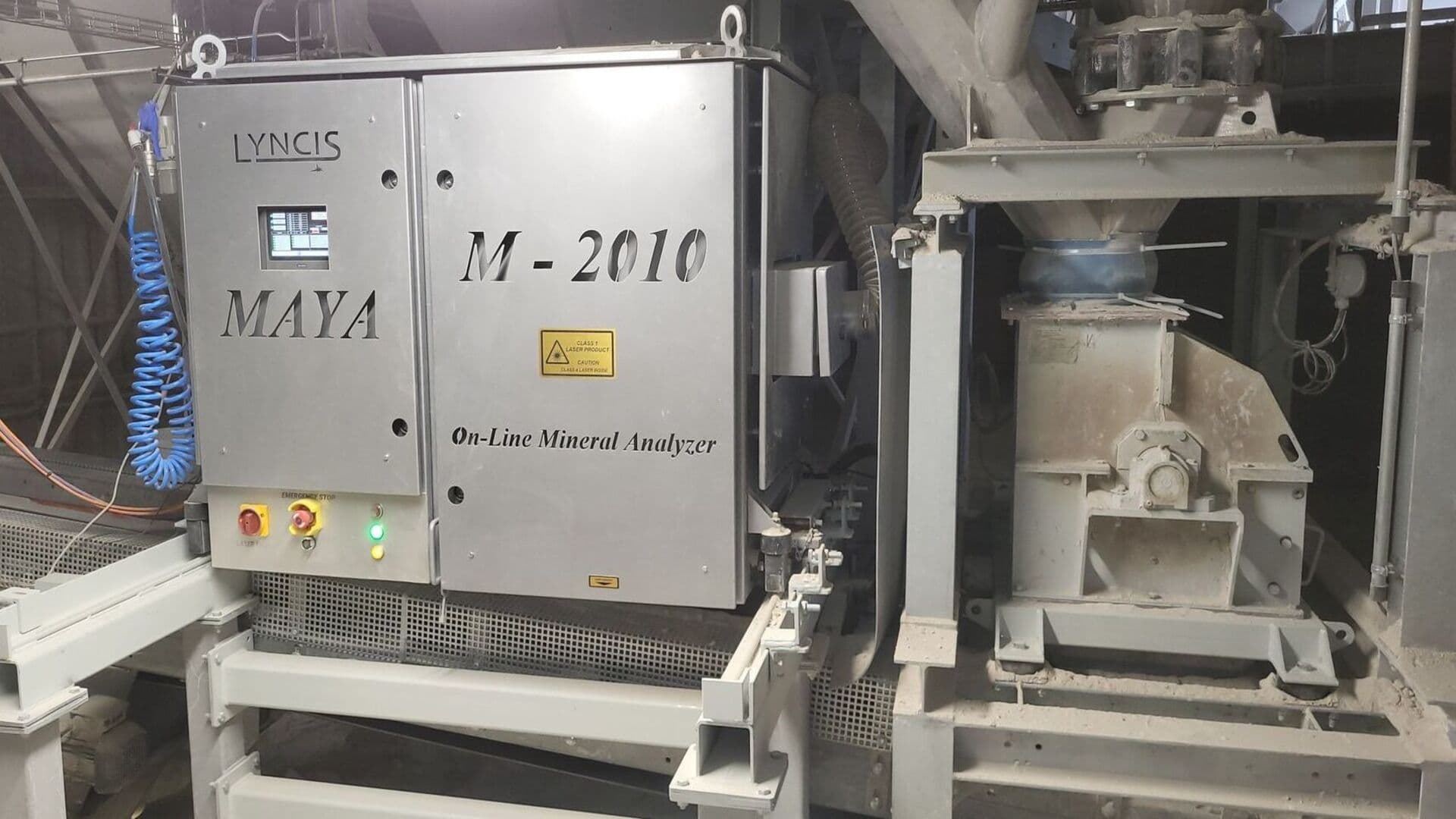
Higher Lime Quality, Lower CO2 Emissions
Europe is at a pivotal moment. As we transition toward a climate-neutral, competitive, and resilient economy, the European Union’s Clean Industrial Deal should offer a robust policy and investment framework to decarbonize energy-intensive industries while strengthening Europe’s technological leadership and industrial sovereignty. More in the European Lime Association, Report 2025 EuLA CO2 Innovation in the Lime Sector 4.0.
The challenge in lime production via the calcination of limestone is to ensure optimal heating conditions and duration. Excessive heating yields a high-quality product but consumes excessive, costly energy, while insufficient heating results in an off-grade product due to unreacted limestone residue.
The Lyncis online elemental analyzer feeds the residual limestone percentage to the plant control system in real time, eliminating the delay caused by laboratory analysis of grab samples and enabling timely adjustment of heating conditions.
Main elements of interest - CO₂, CaO in the lime
Secondary - MgO, H₂O, SiO₂, Al₂O₃, Fe₂O₃ and etc.
Benefits
- Increased lime quality
- Reduced waste
- Reduced energy consumption
- Reduced CO₂ emission
Control of Magnesium and other Impurities in Limestone
Applications
- Stockpiling
- Blending
- Removal of impurities
Elements of interest
CaO, MgO, SiO₂ Al₂O₃, Fe₂O₃, H₂O and etc.
Benefits
- Stable limestone quality
- Reduced waste
Limestone is an important industrial mineral used in construction, industrial processes and agriculture. Often, processing of limestone requires control or removal of impurities like clays, silica, magnesium carbonate, iron compounds and etc. Therefore, continuous online monitoring of CaO, MgO, SiO2, Al2O3, Fe2O3 and other elements directly on the conveyor is essential when handling limestone.
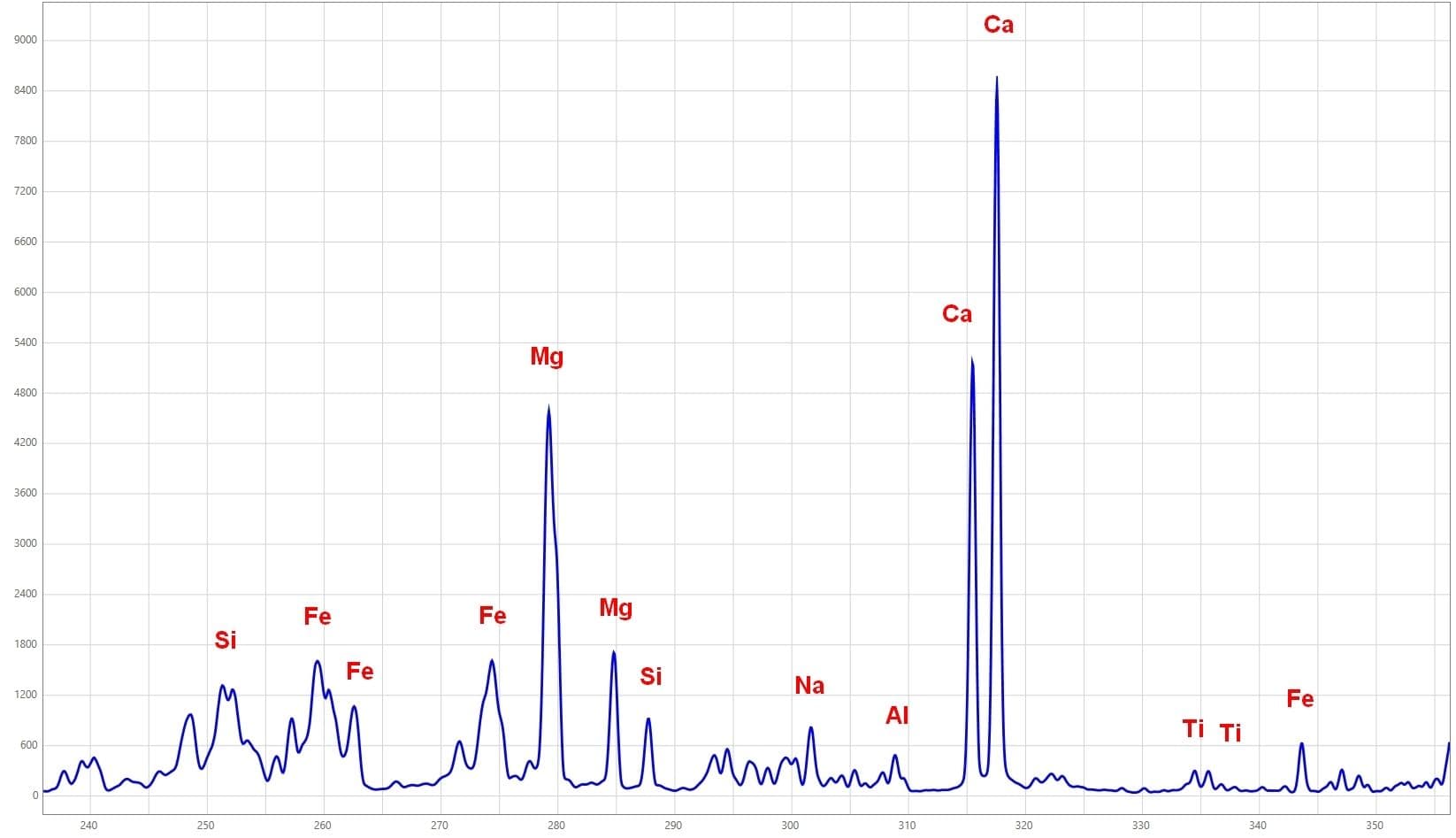
LIBS technology excels in limestone analysis, as it can measure the concentrations of all required elements, especially when real-time MgO concentration is needed, whereas other techniques, such as PGNAA and XRF, cannot provide it.
Magnesium yields strong signals in the LIBS spectrum that are clearly separated from those of calcium and other elements.